
I am, quite frankly, flabbergasted. Not for the first time, and certainly not for the last, but still, every time it happens, a part of me cannot believe it.
Some of the most cultured, traveled, educated, accomplished, and otherwise intelligent people I have encountered in Western societies seem unable, or unwilling, to grasp the reality of gender diversity. People who read widely, hold advanced degrees and progressive self-images, who’ll lecture you at length about systemic injustice in other contexts, but who, when it comes to this topic, suddenly go slack-jawed and claim confusion, retreating behind the comfortable armour of “I just don’t understand it.”
With the sheer volume of information available, it is unacceptable that across political spectrums, people continue to resist an element as simple, and basic, as respect. Respecting someone’s self-identification, and right to name themselves in this world. What is so controversial or confusing about affirming someone’s gender? In this day and age, the refusal to do so is frankly, quite regressive.
And yet, here we are.
I recently watched a video featuring a white, American celebrity podcaster where he spoke about gender diversity as though it were some strange contemporary invention, a millennial quirk at best. He appeared genuinely discombobulated, as if his otherwise capable mind simply could not compute the idea. He wasn’t cruel about it, which almost made it worse. The tone was one of bewildered sincerity, as if he’d encountered an utterly alien phenomenon and couldn’t for the life of him wrap his blonde little head around it.
Gender diversity is not new, for the love of all things holy.
Let us begin where my own history begins: South Asia.
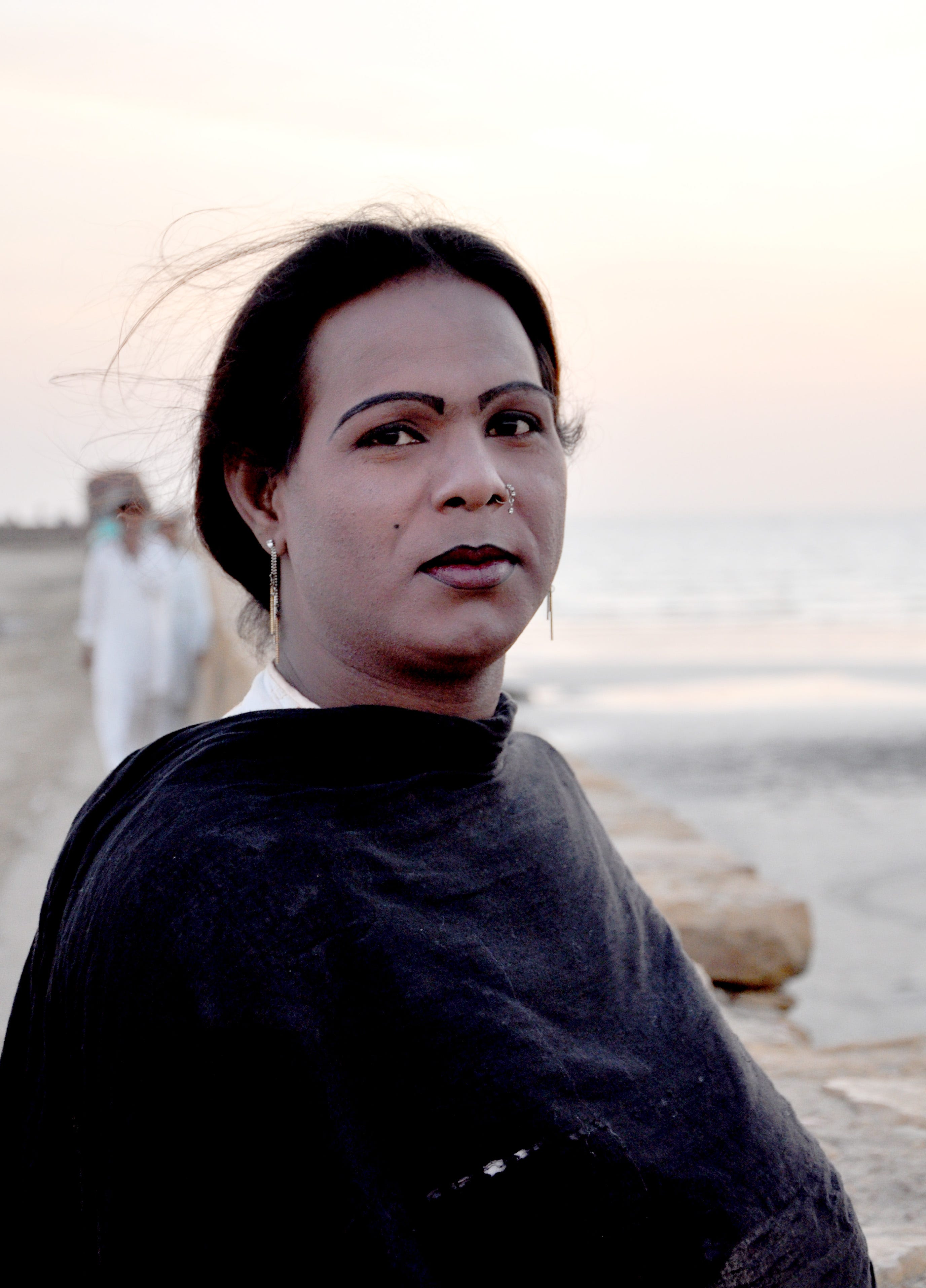
Centuries ago, in the Mughal courts, people of the third gender, known variously as Khawaja Sara, hijra (now outdated term), or eunuch (these terms carry distinct and layered definitions) occupied esteemed, powerful positions. They are not to be imagined as peripheral figures tolerated at the margins of power, far from it. The third gender was central to political power and the shaping of public discourse.
As scholars have documented, during the Mughal period third-gender individuals rose to hold pertinent roles, such as, as political advisors, military commanders, administrators, and trusted guardians. They were considered loyal, and uniquely positioned, moving freely between the public and private spheres. Their third gender gave them unparalleled access to the courts of royalty and the zenanas, spaces forbidden to most men, and their proximity to power was undeniable. Researcher Afshan Bokhari has argued in her historical analysis of “third gender” service in the Mughal court, these individuals performed administrative, religious, and managerial duties that went far beyond the harem settings with which colonial-era writers reductively associated them, a narrow characterization that has, unfortunately, persisted in the region long after the expulsion of the British imperial forces.
In South Asia, their eventual loss of status was imposed most visibly, and violently, through British colonial rule, a regime that prided itself on being progressive, civilized, educated, better than all of those they occupied, and yet could not tolerate the richness of gender expression outside of rigid binaries.
The British “discovered” gender diverse communities and immediately set about legislating their surveillance and control. The culmination was the Criminal Tribes Act of 1871, a piece of legislation that derogatorily labeled Khawaja Sara as a criminal caste. The explicit stated aim of colonial administrators was total extermination. The CTA prohibited gender diverse performances and clothing, severed communities from their livelihoods, and pushed them, as many scholars have noted, into destitution.
So, when we encounter members of the Khawaja Sara being marginalized in what is today India, Pakistan and Bangladesh, know that this dehumanization was engineered.
In Qajar-era Iran, visual records tell a strikingly different story from the one Western aesthetics would have us treat as timeless. Depictions of men and women during this period were often remarkably similar in their facial and bodily features, so similar that gender was at times identifiable only by style of headgear, and sometimes not at all. Overlapping poetic vocabulary was used to praise beauty in men and women alike.
Beauty in the Qajar period was a woman with a thick monobrow, a moustache and facial hair, plump, rounded bodies and bigger bellies. Today’s modern obsession with hairlessness, thinness, reproductive capability is a colonial import, a set of European norms that arrived alongside gunboats, and restructured the visual and erotic imagination of societies that had their own sophisticated aesthetics for centuries.
Ancient Japan offers yet another fracture in the myth of the gender binary as universal and eternal. During the Edo period, gender fluidity was, as scholars have proven, surprisingly common. The wakashu, androgynous youth who constituted a recognized third gender, appeared across social contexts in woodblock prints, Kabuki theater, pleasure districts and believe it or not, also in the courts of Samurai. When fully clothed, wakashu were indistinguishable from women. Many colourful prints depict them as merchants, musicians, fishermen, and Samurai, occupying every social role while existing outside the male-female binary.
This pattern is consistent across continents and centuries. A society with complex, fluid understandings of gender encounters colonialism, and all complexity and nuance is systematically suppressed.
Today, trans communities, such as the Khawaja Sara in Pakistan, face brutal discrimination and ongoing violence. Yet, they are also at the forefront of resistance, organizing nationally, fearlessly advocating for their own rights, and also the rights of women, religious/ethnic minorities, the Baloch and others rendered disposable by the state. In 2018, Pakistan passed the Transgender Persons Act, a landmark legislation that, on paper, was celebrated globally and positioned Pakistan ahead of many Western nations in its legal recognition of gender self-determination. In practice, implementation has remained deeply inadequate. Despite systemic oppression, trans activists and academics continue to lead with unwavering courage across the various provinces of Pakistan.
In my own family, the khawaja sara have always held deep respect. There was never a khatam or niyaz in our home where they were excluded from the distribution of food. My mother used to say: You may turn anyone away, but never turn away a khawaja sara from your door. Their prayers, she believed, carried immense weight. What she meant, whether framed spiritually or culturally, was that they occupied a sacred moral position, and in the eyes of the divine, they were understood to matter profoundly. I grew up with this understanding as common sense.
Gender diversity is ancient, global and deeply human. The violence with which it is being suppressed under a global infrastructure of colonial heteronormativity, is very new and unnatural.
Growing up, I copied my father, crossed my legs the way he did, and wore his shirts and colognes. My mother was glamorous and I adored watching her get all glammed up, but I did not want to emulate her the way I wanted to mirror him. I shaved my face. I grow, quite naturally due to hormone variations, thick dark facial hair, and it never felt like something to be fixed or apologized for. Through my teenage years, I took on the role of a dude amongst my school friends. For the longest time, I went by the name Mumly, wore men’s clothes, and both my family and my school obliged, without hesitation. No one batted an eyelash or staged an intervention. They simply loved me the same, called me what I asked to be called, and let me be. Allowing space for self-expression is so important to cultivate a healthy sense of self and high self-esteem.
I implore you to consider how effortlessly society adapts when names and titles change under more familiar circumstances. When a woman marries and takes her husband’s name, no one demands a philosophical justification. Colleagues update their contacts, email signatures are amended, and within weeks the old name is pretty much gone. When someone earns a PhD and becomes Dr. we adjust immediately, often with enthusiasm. When a divorcée reverts to a maiden name, or when someone important is knighted, when a person converts religions and takes a new name, society accommodates, almost reflexively.
Gender-diverse communities deserve the same courtesies. True progressiveness of the mind invites us to hold socially constructed norms a little more loosely, be willing to change our mind flexibly and to make room for erased histories so we, as a collective, can imagine and cultivate healthier, more creative and inclusive futures.
References:
Michel Raj, M. (2015). “Historical evolution on transgender community in India.” Asian Review of Social Sciences, 4(1), 17–19.
Bokhari, A. (2019). “Third gender and service in Mughal court and harem.” Servants’ Pasts (blog, based on peer-reviewed research). https://servantspasts.wordpress.com/2019/08/12/third-gender-and-service-in-mughal-court-and-harem/
Hinchy, J. (2019). Governing Gender and Sexuality in Colonial India: The Hijra, c. 1850–1900. Cambridge: Cambridge University Press.
Dutta, A. (2012). “An epistemology of collusion: Hijras, kothis and the historical (dis)continuity of gender/sexual identities in eastern India.” Gender & History, 24(3), 825–849.
LSE Gender Blog. (2019). “Hijras and the legacy of British colonial rule in India.” London School of Economics. https://blogs.lse.ac.uk/gender/2019/06/17/hijras-and-the-legacy-of-british-colonial-rule-in-india/
Hinchy, J. (2020). Review discussion in: TSQ: Transgender Studies Quarterly, 8(2), 265–268. Duke University Press.
Najmabadi, A. (2005). “Gendered transformations: Beauty, love, and sexuality in Qajar Iran.” Iranian Studies, 38(1). Published online by Cambridge University Press.
Museum of Islamic Art, Doha. (2015). “Qajar Women: Images of Women in 19th Century Iran.” Exhibition catalogue. https://mia.org.qa
Najmabadi, A. (2005). Women with Mustaches and Men without Beards: Gender and Sexual Anxieties of Iranian Modernity. University of California Press.
Japan Society. (2017). A Third Gender: Beautiful Youths in Japanese Prints. Exhibition curated from the Royal Ontario Museum collection, subsequently shown at multiple institutions.
Indypendent. (2017). “Exploring fluid gender norms in pre-modern Japan.” https://indypendent.org/2017/06/exploring-fluid-gender-norms-in-pre-modern-japan/
Leupp, G. P. (1997). Male Colors: The Construction of Homosexuality in Tokugawa Japan. University of California Press.
JSTOR Daily. (2025). “The disappearance of Japan’s ‘third gender.’” https://daily.jstor.org/the-disappearance-of-japans-third-gender/
Outright International. (2026). “Pakistan.” https://outrightinternational.org/our-work/asia/pakistan
International Commission of Jurists. (2020). “Pakistan: Transgender Persons (Protection of Rights) Act, 2018 - A Briefing Paper.” https://www.icj.org/wp-content/uploads/2020/03/Pakistan-Transgender-Advocacy-Analysis-brief-2020-ENG.pdf
Feministeerium. (2024). “Recognition to regression: Protecting transgender rights ended in striking down self-perceived gender identity and its expression in Pakistan.” https://feministeerium.ee/en/transgender-rights-in-pakistan/
Gender Community. (2025). “The history of the trans movement in Pakistan.” https://gendercommunity.org/the-history-of-the-trans-movement-in-pakistan/